ONE WAY THROUGH THE IONIAN: 7 NIGHTS BY MOTOR YACHT FROM KEFALONIA TO CORFU
Kefalonia to Corfu
Read more
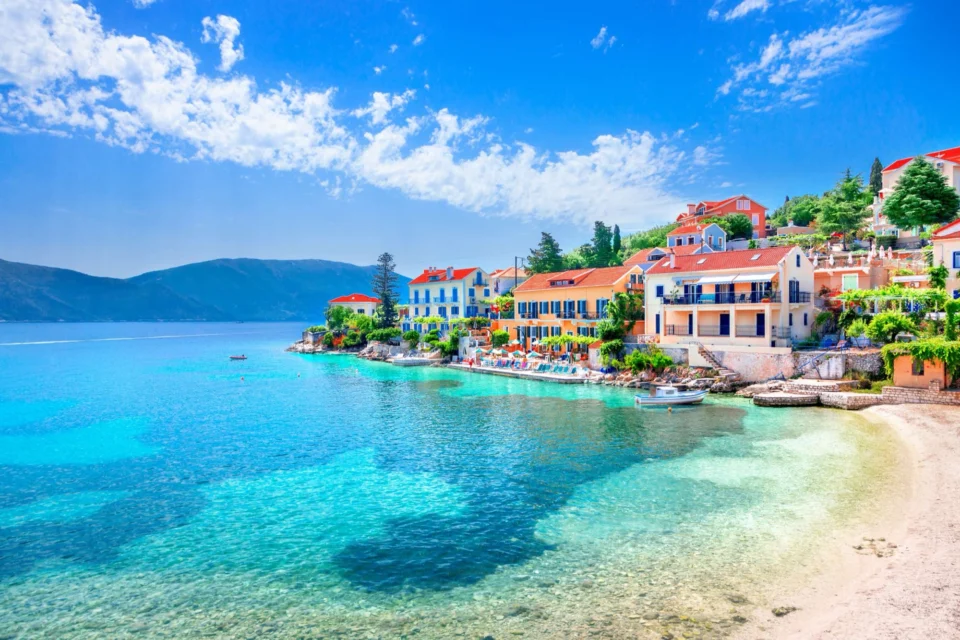
An 8-Day One-Way Ionian Islands Itinerary from Kefalonia to Corfu
Six Islands and the Coast of Epirus, South to North – From Fiskardo to the Old Town of Corfu
A one-way route covers the Ionian from south to north without repeating a passage: embarkation on Kefalonia, then Ithaca, Meganisi, Lefkada, the mainland coast at Parga, Paxos and Antipaxos, and disembarkation in Corfu, with no return leg at the end of the week. The legs are short. The longest is about 31nm, most are under 15nm, and on a motor yacht the day’s cruising is usually finished by lunchtime, which leaves the afternoon at anchor and the evening in a harbour village. The quays on this route are small, so on most nights the yacht ties up a few steps from the tavernas.
Distances and times are approximate and based on a cruising speed of 11 to 12 knots; a sailing catamaran covers the same route with longer days at sea. The itinerary is a sample, weather permitting, and the final route is agreed with the captain at embarkation. One-way charters are offered on a number of yachts based in the Ionian; where the owner charges a repositioning fee, it is quoted together with the rate.
Distances and times are approximate and based on a cruising speed of 11 to 12 knots; a sailing catamaran covers the same route with longer days at sea. The itinerary is a sample, weather permitting, and the final route is agreed with the captain at embarkation. One-way charters are offered on a number of yachts based in the Ionian; where the owner charges a repositioning fee, it is quoted together with the rate.
Read more
Greek Yacht Charter Itinerary
Total Distance: ~170nm Cruising Time: ~16 Hours
Route: Sami, Kefalonia — Fiskardo — Assos — Vathy, Ithaca — Kioni — Meganisi — Lefkada Town — Parga — Gaios, Paxos — Antipaxos — Corfu Town
Vessel: Motor Yacht
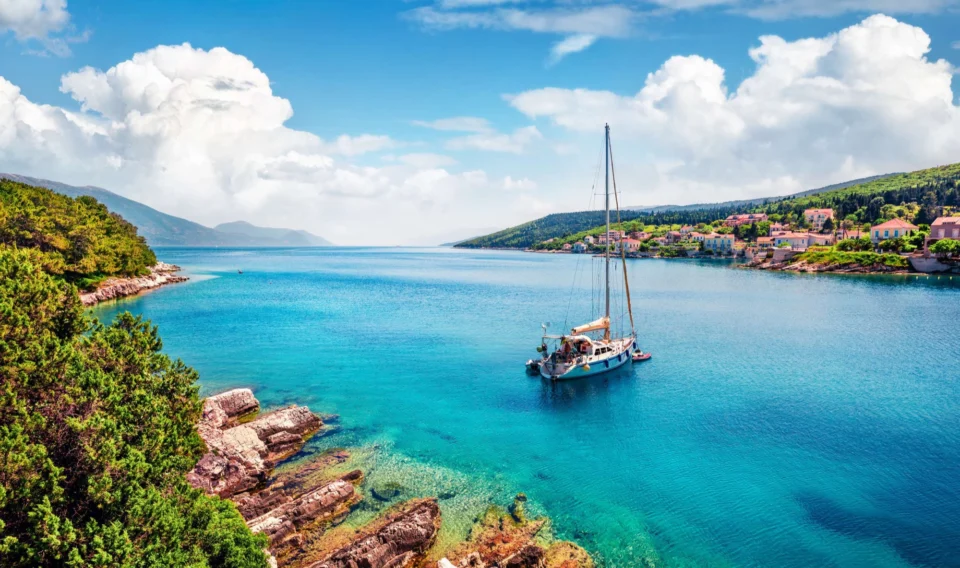
Sami, Kefalonia to Fiskardo ~13nm | 1h 15m
Day 1: Embarkation and the Venetian Harbour of Fiskardo
Embarkation in Sami, the ferry port on Kefalonia’s east coast, about 40 minutes by road from the airport. The yacht runs north inside the strait between Kefalonia and Ithaca, past the pebble beach of Antisamos and the village of Karavomylos, where the Melissani cave lake lies a few hundred yards inland, to the northern tip of the island. A swim stop on the way at Foki or Emblisi, two small bays a mile short of the village with white pebbles and water clear to the bottom. Fiskardo is the one village on Kefalonia that stood through the earthquake of 1953, and the result is a harbour front of 18th- and 19th-century houses in ochre, rose and cream under cypress and olive trees. Yachts moor stern-to in the middle of the village. Behind the quay are a few lanes of shops selling local wine, honey and thyme, a Venetian lighthouse on the point and the remains of a Roman cemetery uncovered in 1993. Dinner is at one of the tavernas along the water.
Read more
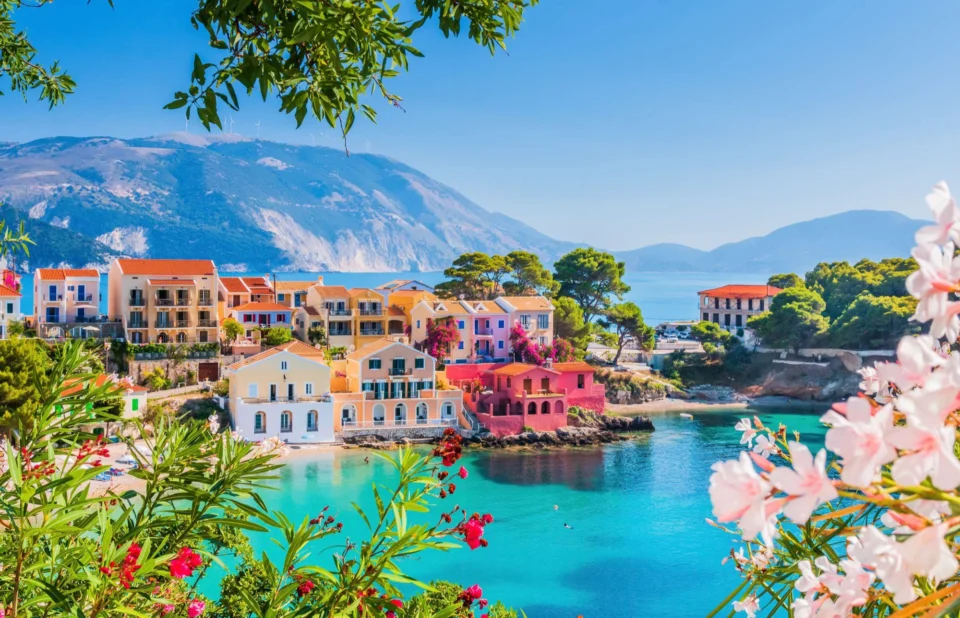
Fiskardo to Vathy, Ithaca via Assos ~31nm | 2h 55m
Day 2: Assos and the Harbour of Odysseus
A short morning run round Cape Dafnoudi and down the west coast of Kefalonia to Assos, a village built on the neck of land that joins a round, pine-covered peninsula to the island. The Venetians began fortifying the peninsula in 1593; the walls still ring the summit, and the walk up from the harbour square takes about half an hour, with the sea on both sides of the path. The anchorage lies in the bay north of the isthmus, and lunch is on board or at one of the three or four tavernas by the water. In the early afternoon the yacht rounds the north of Kefalonia again and crosses the strait to Ithaca, entering the long, bent inlet of Vathy, the island’s capital. The town sits at the head of a bay so enclosed that it cannot be seen from the open sea; the islet of Lazaretto, once a quarantine station and later a prison, stands in the middle of the harbour. Vathy has an archaeological museum with finds from the Mycenaean period, a waterfront of two-storey houses rebuilt after 1953, and the Cave of the Nymphs a short drive above the town, where Homer has Odysseus hide the gifts of the Phaeacians on his return.
Read more
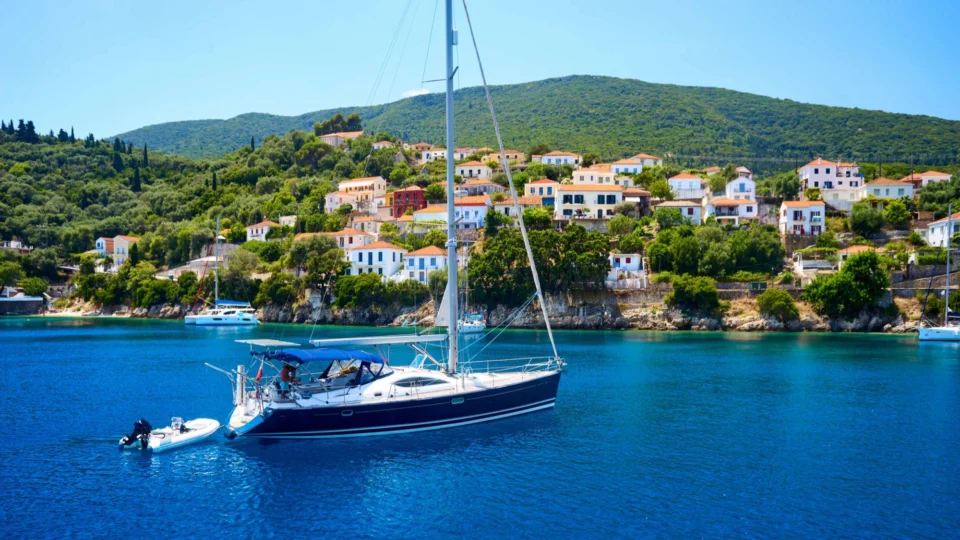
Vathy to Kioni ~10nm | 55m
Day 3: Ithaca's East Coast and the Windmills of Kioni
A day with almost no cruising. Out of the inlet and north along Ithaca’s east coast there is a choice of beaches reachable only from the water: Gidaki, a long bank of white pebbles under a steep slope with no road to it, and Sarakiniko and Filiatro, two deep coves with a sand-and-pebble bottom. The yacht anchors for the morning and most of the afternoon; the water in these bays stays calm when the afternoon wind is blowing outside. By late afternoon the yacht is in Kioni, a small horseshoe harbour with the houses climbing the slope behind it and three ruined stone windmills on the southern arm of the bay. The village was settled in the 16th century by islanders moving down from the hilltop settlement of Anogi, and it escaped the worst of the 1953 earthquake, which is why its neoclassical houses are still standing. The quay has room for a handful of yachts, stern-to, with the alternative of anchoring in the bay, and three or four tavernas have their tables at the water’s edge.
Read more
Kioni to Meganisi via Afales Bay ~25nm | 2h 20m
Day 4: The Northern Tip of Ithaca and the Inlets of Meganisi
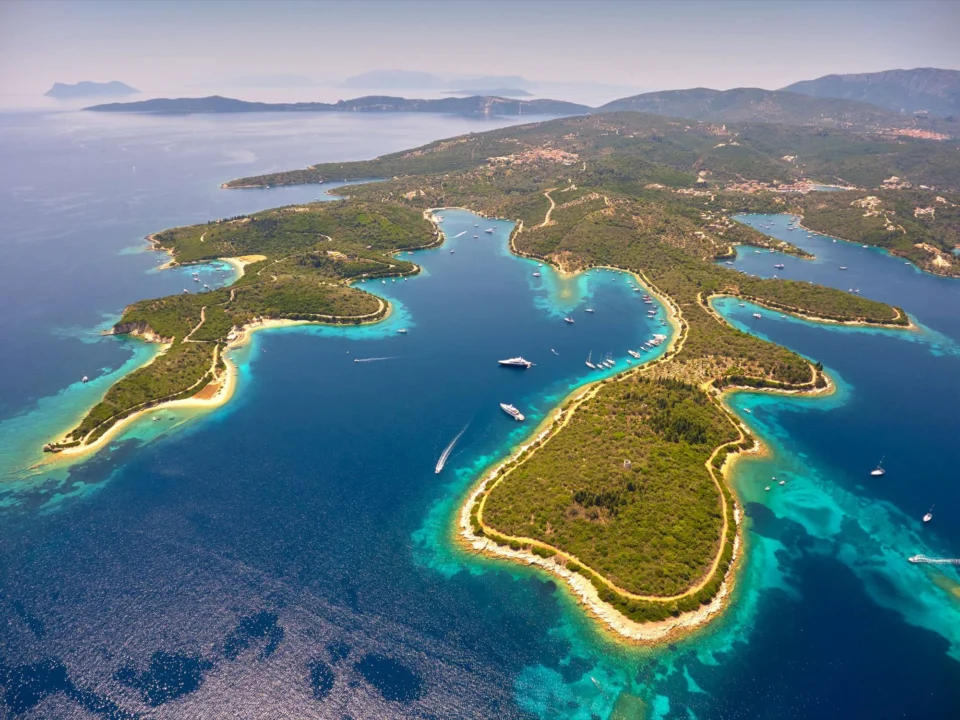
A morning swim stop on the northern tip of Ithaca: Afales, a wide bay of white pebbles below the village of Exogi, open to the north and empty on most days, or the small harbour of Frikes if the wind is already up. From here the yacht crosses north to Meganisi, the largest of the islands off Lefkada’s east coast and still a farming island of three villages and about a thousand residents. Its south-east coast is cut into long, narrow inlets, Atherinos, Abelike and Kapali among them, each with a few boats at anchor, a taverna at the head and olive groves down to the water. On the west coast is the Papanikolis cave, named after the Greek submarine said to have sheltered in it during the Second World War; it is high and wide enough for the tender to go inside. The night is spent at anchor in one of the inlets or on the quay at Vathy, the island’s port, where fishing boats and yachts share the harbour and the tavernas stand directly on the waterfront.
Read more
Meganisi to Parga via Lefkada Town ~41nm | 3h 50m
Day 5: Lefkada Town and the Mainland Coast to Parga
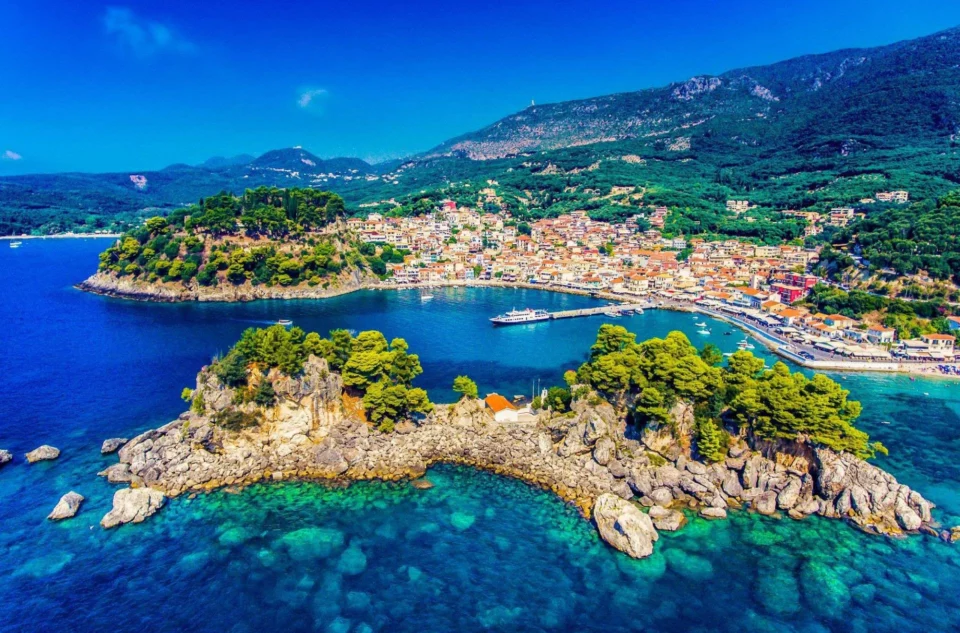
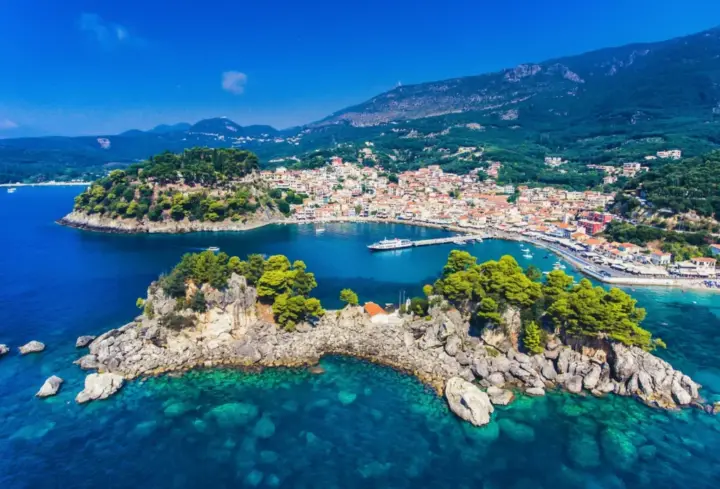
North through the channel between Lefkada and the mainland, past the islets of Skorpios, Sparti and Madouri off Nydri, to Lefkada Town at the island’s northern end. The town is reached by a canal that runs beside the Venetian fortress of Agia Mavra and through the floating bridge that joins Lefkada to the mainland; the bridge opens for yachts on the hour. Lefkada Town is a short stop for a walk along the main street, where the upper floors of the houses are built of timber faced with painted metal sheet, an earthquake precaution that has become the town’s look. After lunch the yacht leaves the islands for the afternoon and runs north along the coast of Epirus to Parga, a mainland town built like an island one: a steep amphitheatre of painted houses facing a bay with the islet of Panagia and its white chapel in the middle of it. The Venetian castle, rebuilt in 1572, covers the headland above the town, and the beach of Valtos lies on its far side. Parga belonged to Venice together with the islands for four centuries and was sold to Ali Pasha in 1819; his own fortress still stands on the hill at Anthousa behind the town. The yacht anchors off the beach or moors in the small harbour, and the evening is in the lanes of the old town.
Read more
Parga to Gaios, Paxos ~11nm | 1h 05m
Day 6: Olive-Grove Paxos
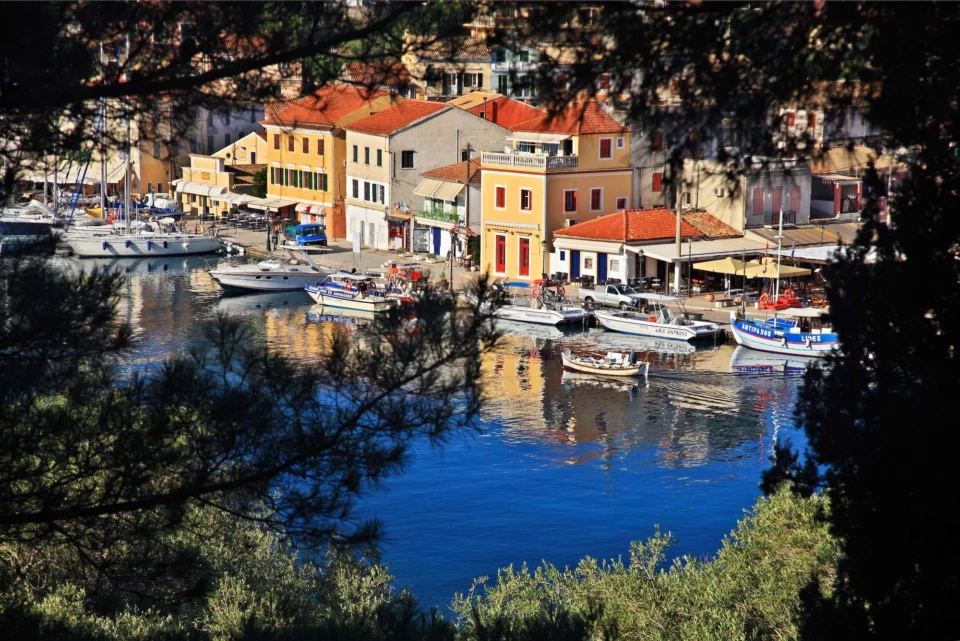
A short crossing west to Paxos, the smallest of the seven main Ionian islands, about 6 mi (10 km) long and 2.5 mi (4 km) wide and covered almost entirely in olive trees, most of them planted under Venetian rule, when the Republic encouraged the island to grow oil for it. The yacht arrives in Gaios before lunch. The harbour is a long channel between the town and the islet of Agios Nikolaos, which carries a Venetian fort of 1423 and closes the port off from the sea; a second islet, Panagia, lies beyond it with a monastery that holds its festival on August 15. The waterfront is a single line of houses in cream, ochre and pink, a square with a church, and the shops and tavernas that serve the island. In the afternoon the tender goes along the west coast, where Paxos drops into the sea in cliffs several hundred feet high: the sea caves at Ypapanti, the rock arch at Tripitos and the white rock face of Erimitis on the north-west corner, where the sunset is watched from the water. Dinner on the quay at Gaios, or a taxi to Loggos, the island’s smallest village, with four or five tavernas around a tiny harbour.
Read more
Gaios to Mongonisi, Paxos via Antipaxos ~8nm | 50m
Day 7: Antipaxos and the South of Paxos
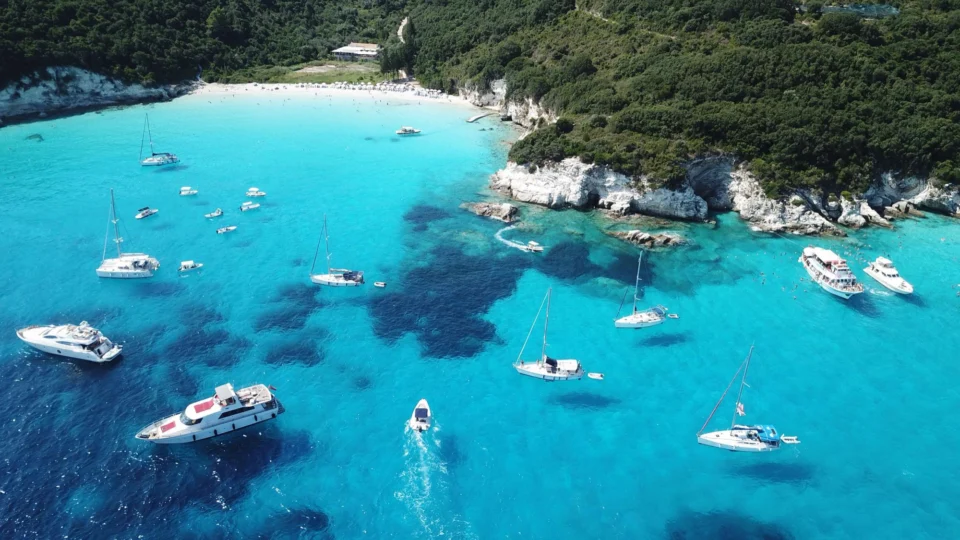
Two miles south of Paxos, Antipaxos is an island of under two square miles, a few dozen permanent residents, vineyards that produce a dark local wine, and two beaches on its east coast that are the reason yachts come: Vrika, a short arc of white sand, and Voutoumi, a longer curve of fine white pebbles over a sand bottom that gives the water its colour. The morning and lunch are spent at anchor here, with a swim ashore and a walk up the path through the vines to the taverna above Voutoumi. On the west coast the Antipaxos caves, a run of grottoes at the foot of the cliffs, can be visited by tender when the sea is flat. In the afternoon the yacht returns the three miles to Paxos. Mongonisi, a lagoon-like bay on the island’s southern tip enclosed by a small islet, has a sand beach, a single taverna and room to anchor for the night; the alternative is the quay in Gaios for a last evening in the town.
Read more
Paxos to Corfu Town ~30nm | 2h 50m
Day 8: Corfu Town and Disembarkation
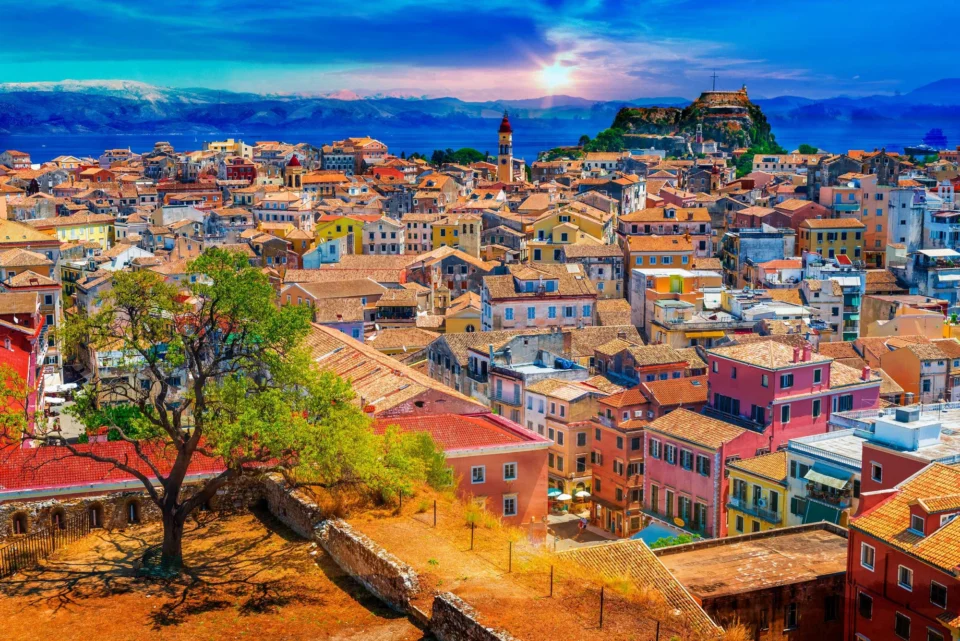
The last passage of the week runs north along the east coast of Corfu, with the mountains of Albania across the strait to starboard and the islet of Pontikonisi, Mouse Island, off Kanoni as the town comes into view. Corfu Town is the largest town in the Ionian and the only one never taken by the Ottomans; the Venetians held it from 1386 to 1797 and built the two fortresses that frame it, the Old Fortress on its rocky promontory and the New Fortress above the old port. Between them is the Old Town, on the UNESCO World Heritage list since 2007: the esplanade of the Spianada with its cricket ground, the arcaded Liston built under French rule, the church of Saint Spyridon with the tallest bell tower on the island, and the kantounia, the narrow Venetian lanes behind them. Disembarkation is at the marina at Gouvia or in the old port, depending on the yacht; the airport is a 15-minute drive from either. With an afternoon flight there is time for the Achilleion, the palace built for Empress Elisabeth of Austria at Gastouri in 1890, or for lunch in the Old Town.
Read more
Charter Costs
What a week like this costs
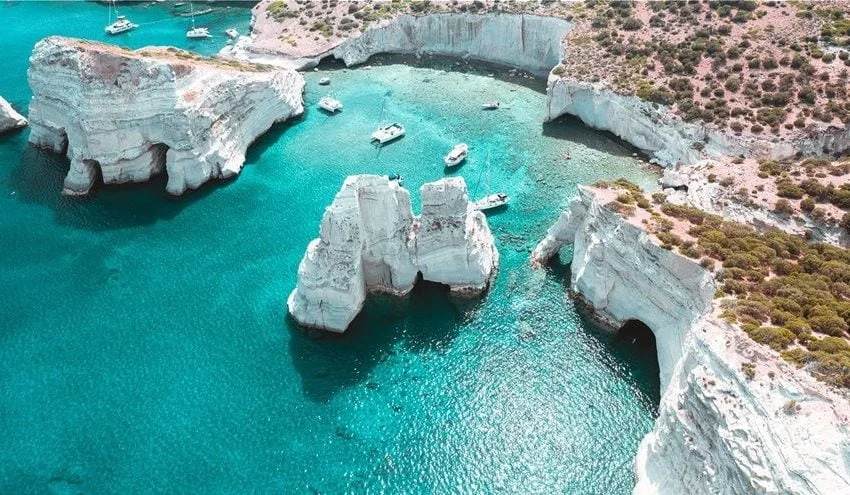
This route is a sample, and what a week costs depends above all on the boat. The figures here are medians, the middle of the fleet rather than a starting price: a crewed catamaran in Greece has a median of about €17,600 a week and a motor yacht €52,000, both before APA and VAT. A luxurious motor yacht goes for €100,000, €200,000 and more a week, while a smaller catamaran costs less than the median. See the full breakdown by boat type with real yachts at every price point, or contact us with your requirements and we will offer you the yachts that best match your group, your wishes and your budget.
Read more
Greek Yacht Charters
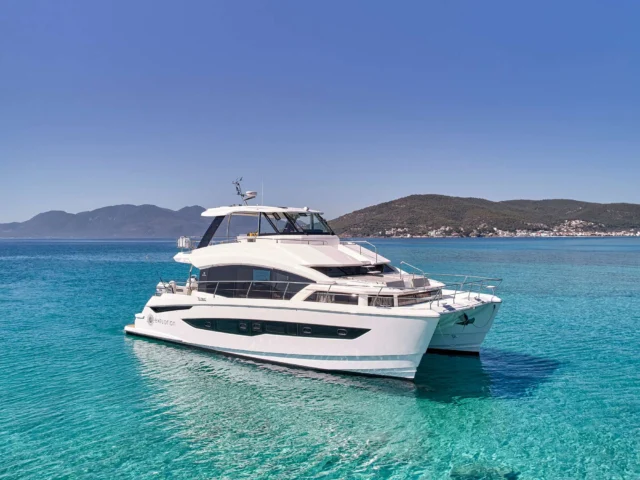
EXPLORION
Greece
54.00 Ft ft ✦ 8 pax ✦ 4 cabins
€21,000 per week
+ expenses
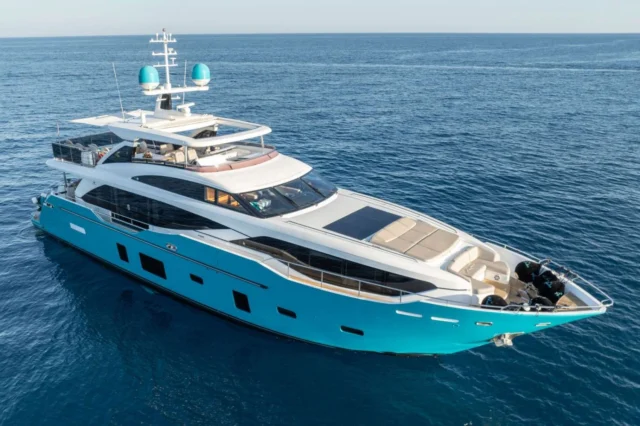
ANKA
W. Med -Naples/Sicily, Greece, W. Med -Riviera/Cors/Sard., Turkey
99.00 Ft ft ✦ 10 pax ✦ 5 cabins
€90,000 per week
+ expenses
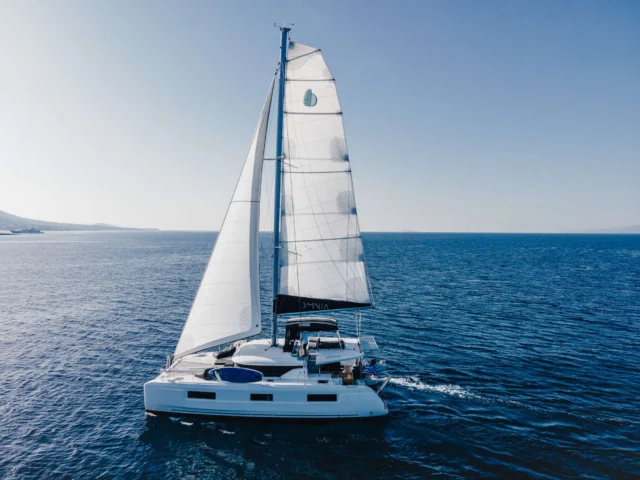
S/Cat Omnia Special offers season 2026
Ask us for more information
Omnia
Greece
46.00 Ft ft ✦ 8 pax ✦ 4 cabins
€12,700 per week
+ expenses
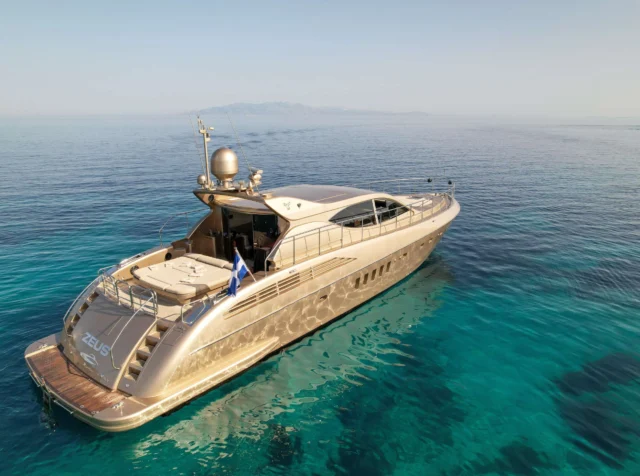
ZEUS
Greece
78.74 Ft ft ✦ 7 pax ✦ 3 cabins
€30,000 per week
+ expenses
Our Pick 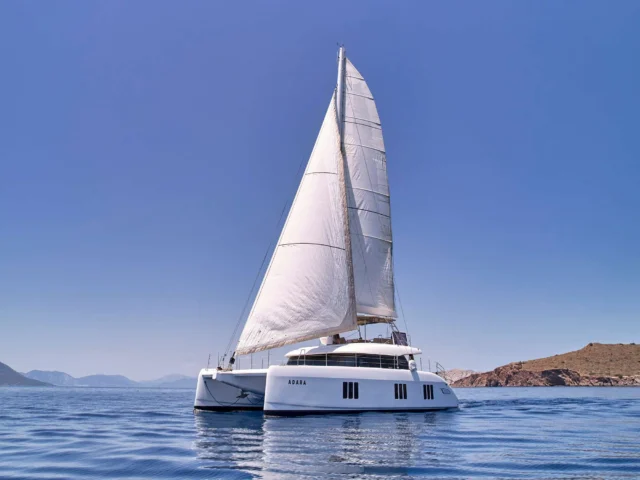
ADARA
Greece
50.00 Ft ft ✦ 8 pax ✦ 4 cabins
€23,500 per week
+ expenses
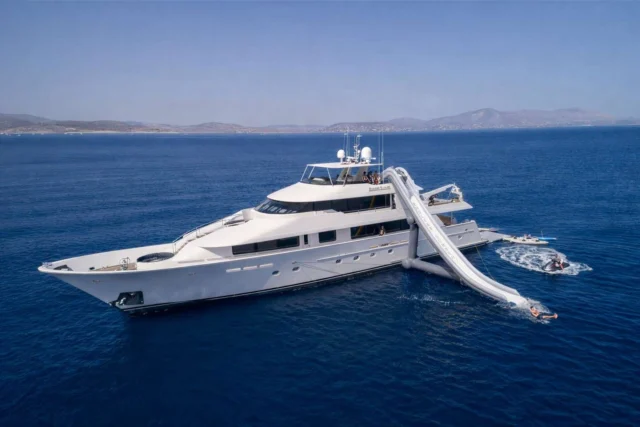
ENDLESS SUMMER
Greece, Turkey, Croatia
130.00 Ft ft ✦ 12 pax ✦ 6 cabins
€105,000 per week
+ expenses
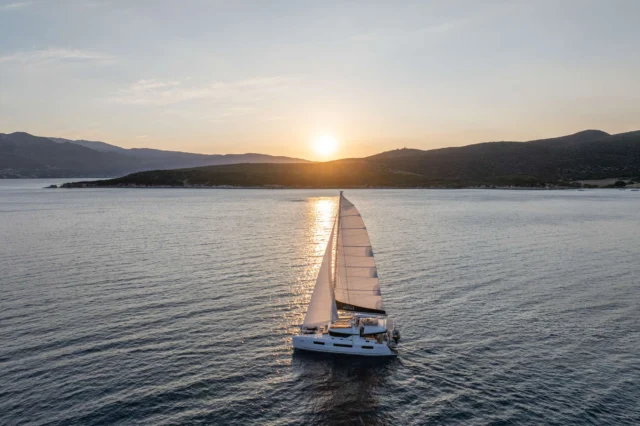
ARANEL
Greece
51.00 Ft ft ✦ 10 pax ✦ 6 cabins
€15,500 per week
+ expenses
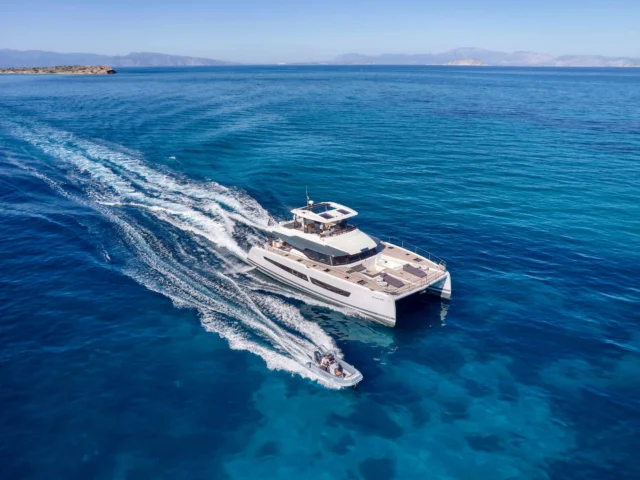
ChristAl MiO
Greece
64.00 Ft ft ✦ 10 pax ✦ 5 cabins
€34,000 per week
+ expenses
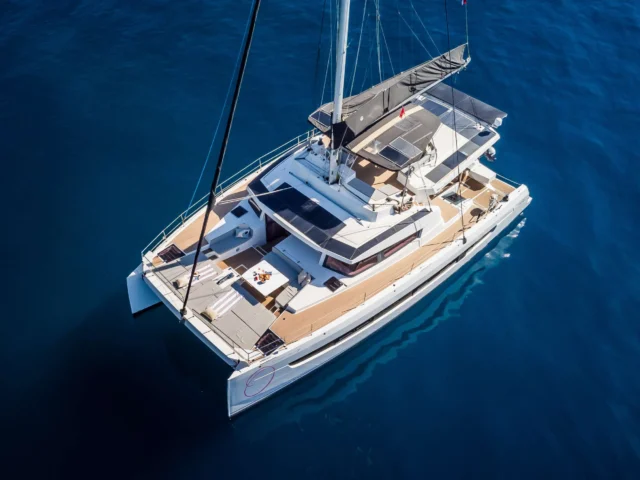
OCEAN LOUNGE
Greece
55.00 Ft ft ✦ 10 pax ✦ 5 cabins
€18,500 per week
+ expenses
ENDLESS SUMMER
Greece, Turkey, Croatia
130.00 Ft ft ✦ 12 pax ✦ 6 cabins
€105,000 per week
+ expenses
ANKA
W. Med -Naples/Sicily, Greece, W. Med -Riviera/Cors/Sard., Turkey
99.00 Ft ft ✦ 10 pax ✦ 5 cabins
€90,000 per week
+ expenses
EXPLORION
Greece
54.00 Ft ft ✦ 8 pax ✦ 4 cabins
€21,000 per week
+ expenses
S/Cat Omnia Special offers season 2026
Ask us for more information
Omnia
Greece
46.00 Ft ft ✦ 8 pax ✦ 4 cabins
€12,700 per week
+ expenses
Our Pick
ADARA
Greece
50.00 Ft ft ✦ 8 pax ✦ 4 cabins
€23,500 per week
+ expenses
ChristAl MiO
Greece
64.00 Ft ft ✦ 10 pax ✦ 5 cabins
€34,000 per week
+ expenses
OCEAN LOUNGE
Greece
55.00 Ft ft ✦ 10 pax ✦ 5 cabins
€18,500 per week
+ expenses
ZEUS
Greece
78.74 Ft ft ✦ 7 pax ✦ 3 cabins
€30,000 per week
+ expenses
ARANEL
Greece
51.00 Ft ft ✦ 10 pax ✦ 6 cabins
€15,500 per week
+ expenses
Check Other Itineraries
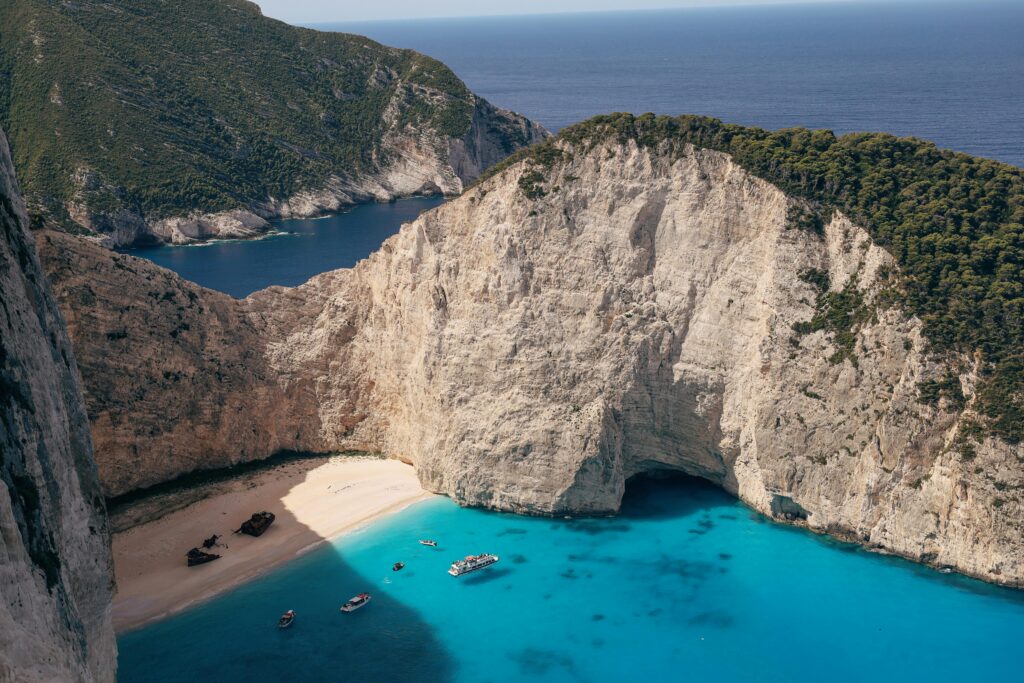
Greece
Zakynthos to Zakynthos: Ionian Islands Itinerary

Greece
Lefkas to Lefkas: Ionian Islands Itinerary

Greece
Athens to Athens: Saronic Gulf Itinerary

Greece
Athens to Athens: The Volcanic Soul of the Cyclades

Greece
Athens to Athens: Cyclades Itinerary with Mykonos and Paros
Croatia
Dubrovnik to Split: Dalmatia One-Way Yacht Charter Itinerary
Croatia
Split to Dubrovnik: Dalmatia One-Way Yacht Charter Itinerary
Croatia
Split to Split: Croatia Yacht Charter Itinerary

Italy
Salerno to Salerno: Amalfi Coast Catamaran Itinerary

Italy
Olbia to Olbia: Sardinia Yacht Charter Itinerary

Italy
Palermo to Palermo: Sicily & Aeolian Archipelago Itinerary

Italy
Naples to Naples: Amalfi Coast Itinerary with Ravello
Italy
Naples to Naples: Amalfi Coast Itinerary with Sorrento

French Riviera
Monaco to Monaco: French Riviera Yacht Charter Itinerary
BVI & USVI
St Thomas to St Thomas: USVI and BVI Yacht Charter Itinerary

BVI & USVI
Tortola to Tortola: BVI Yacht Charter Itinerary
St Martin & St Barts
St Maarten to St Maarten: St Martin, Anguilla and St Barts Yacht Charter Itinerary

Bahamas
Nassau to Nassau: Bahamas Yacht Charter Itinerary
Belize
Belize City to Belize City: Central, Glover’s & Southern Itinerary
Belize
Belize City to Belize City: Central & Southern Itinerary
Belize
Belize City to Belize City: North & Central Itinerary
Belize
Belize City to Belize City: North & Central Itinerary, 4 or 5 Nights
Belize
Belize City to Placencia: Southern Itinerary, 4 or 5 Nights
Belize
Belize City to Belize City: Northern Itinerary, 4 or 5 Nights
Belize
Belize City to San Pedro: Northern Itinerary, 4 or 5 Nights
New England
Newport to Newport: New England Yacht Charter Itinerary
Explore charter destinations
Other Destinations
New England
Destination
Belize
Destination
St Vincent & The Grenadines
Destination
St Martin & St Barts
Mediterranean
Croatia
Mediterranean
French Riviera
Mediterranean
Italy
Mediterranean
Turkey
Mediterranean
Greece
Destination
British Virgin Islands
Destination
US Virgin Islands
Destination
The Caribbean
Latest News

What to do
What to Pack for a Week on a Crewed Yacht Charter: Your Ultimate Guide
Industry Updates
EMMYS 2026: Exploring Greece’s Crewed Charter Fleet
Industry Updates
Mediterranean Yacht Show 2026 (MEDYS) Highlights
Industry Updates
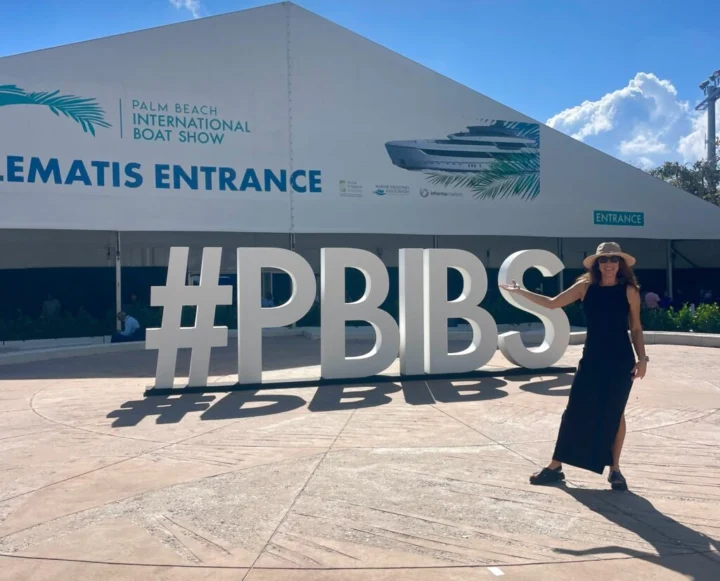
PBIBS 2026: The Future of Luxury Yachting in Palm Beach
Industry Updates
CROYA Yacht Show 2025: Croatia Shines as a Charter Destination
Yachts
Experiencing the Best of “Below Deck” on a Real Luxury Catamaran
Destination
Sailing in the British Virgin Islands on a Crewed Yacht: Endless Adventures Await

Yachts
All-Inclusive Yacht Charters: Luxury, Adventure, and Total Relaxation

What to do
Navigating the Waters: Why to use a Crewed Yacht Charter Broker?
FEATURED CHARTER YACHTS
Personalized vacation planning.
Experience and knowledge
We focus on the Virgin Islands, the Bahamas and the Mediterranean. We’ve been to all destinations we offer. You are in good hands!
Yachts for all tastes and budgets
Catamaran, Power Yacht, or perhaps a traditional Gullet? We offer an extensive selection of all inclusive crewed vessels to cater to your preferences.